
Digital Innovation: Driving Growth Through Strategic Transformation
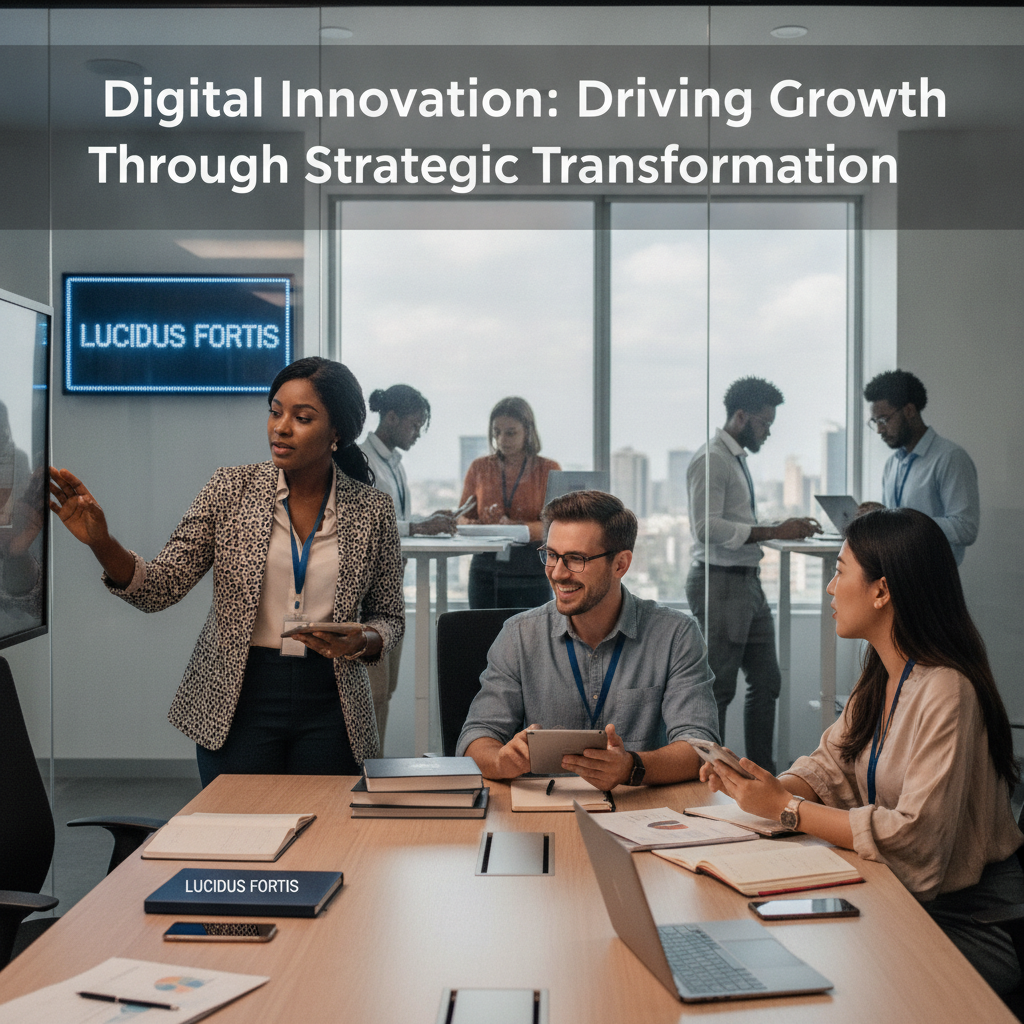
Digital innovation is no longer a choice but a necessity for businesses seeking sustainable growth. At Lucidus Fortis (LF), we integrate cutting-edge technologies, agile methodologies, and human-centered design to help organizations transform their operations and culture. This article explores how strategic digital innovation drives performance, revenue, and people satisfaction.
The Core Pillars of Digital Innovation at Lucidus Fortis
The true engine of digital innovation at Lucidus Fortis is not a single technology, but a triad of interconnected pillars that form the bedrock of our AI strategy for enterprises. We have long understood that merely layering digital tools onto legacy processes yields fleeting results. Instead, we architect a resilient ecosystem where Strategic Foresight, Agile Transformation, and Human-Centered Design coalesce to create sustainable competitive advantage. This is how we, as a global business strategy firm, turn digital disruption into a calculable growth trajectory for our clients.
The first pillar, Strategic Foresight, is the lens through which we identify latent opportunities. It is a rigorous discipline that moves beyond reactive market analysis. By fusing advanced data analytics with deep domain expertise in operational excellence consulting, we map emerging technological and behavioral shifts. For a fintech client facing regulatory saturation, we didn’t just recommend a new app; we used predictive modeling to identify an underserved SME lending corridor. Our AI-driven business consulting revealed a shift in cross-border transaction patterns, allowing us to pre-emptively design a blockchain-based verification system that reduced fraud by 40% and opened a new revenue stream. This foresight is the difference between catching a wave and being swept away by it.
This vision is useless without the ability to execute with velocity, which brings us to the second pillar: Agile Transformation. At Lucidus Fortis, we embed agility not as a project management fad, but as a cultural operating system. We dismantle monolithic, slow-moving departments in favor of cross-functional squads that own outcomes from ideation to deployment. In the healthcare sector, we partnered with a hospital network to overhaul its patient intake process. Instead of a year-long rollout, we deployed a team of data scientists, clinicians, and UX designers to run two-week sprints. Using rapid prototyping, we tested a triage algorithm directly with patients. The result was a 30% reduction in wait times and a system that adapts to seasonal viral surges autonomously. This iterative cycle accelerates business process optimization while drastically lowering the risk of large-scale failure.
However, no algorithm or slick interface succeeds if it ignores the human element. This is why Human-Centered Design is the third, and perhaps most critical, pillar. We ensure that every digital solution is not just powerful, but intuitive, inclusive, and empowering. For a retail client seeking sustainable business consulting, we designed a supply chain dashboard for procurement officers. The raw data was complex, but we focused on the user’s cognitive load. By tailoring the interface to mirror their natural decision-making flow, adoption rates skyrocketed. Internally, we use these same principles to drive corporate performance improvement. Our own LF business consulting teams use a custom platform that simplifies the overwhelming complexity of cross-border business growth into clear, actionable visualizations. This directly increased our team’s billable efficiency by 25% and, more importantly, our consultants report a sharp increase in job satisfaction because the tools they use respect their time and expertise.
These three pillars are mutually reinforcing. Strategic Foresight identifies the right destination; Agile Transformation provides the vehicle to get there fast; and Human-Centered Design ensures everyone wants to ride. As a premium management consulting firm, our role is to orchestrate this synergy, ensuring that our digital transformation consulting delivers not just technological upgrades, but genuine, measurable transformation. By consistently applying this integrated framework, Lucidus Fortis helps organizations move from being passive adopters of technology to active architects of their industry’s future.
Conclusions
Digital innovation is a strategic imperative that reshapes how organizations compete and grow. By combining foresight, agility, and human-centered design, Lucidus Fortis empowers businesses to unlock new revenue streams, enhance operational performance, and build a culture of continuous improvement. The future belongs to those who innovate intentionally and inclusively.