Mastering Team Dynamics for Organizational Success
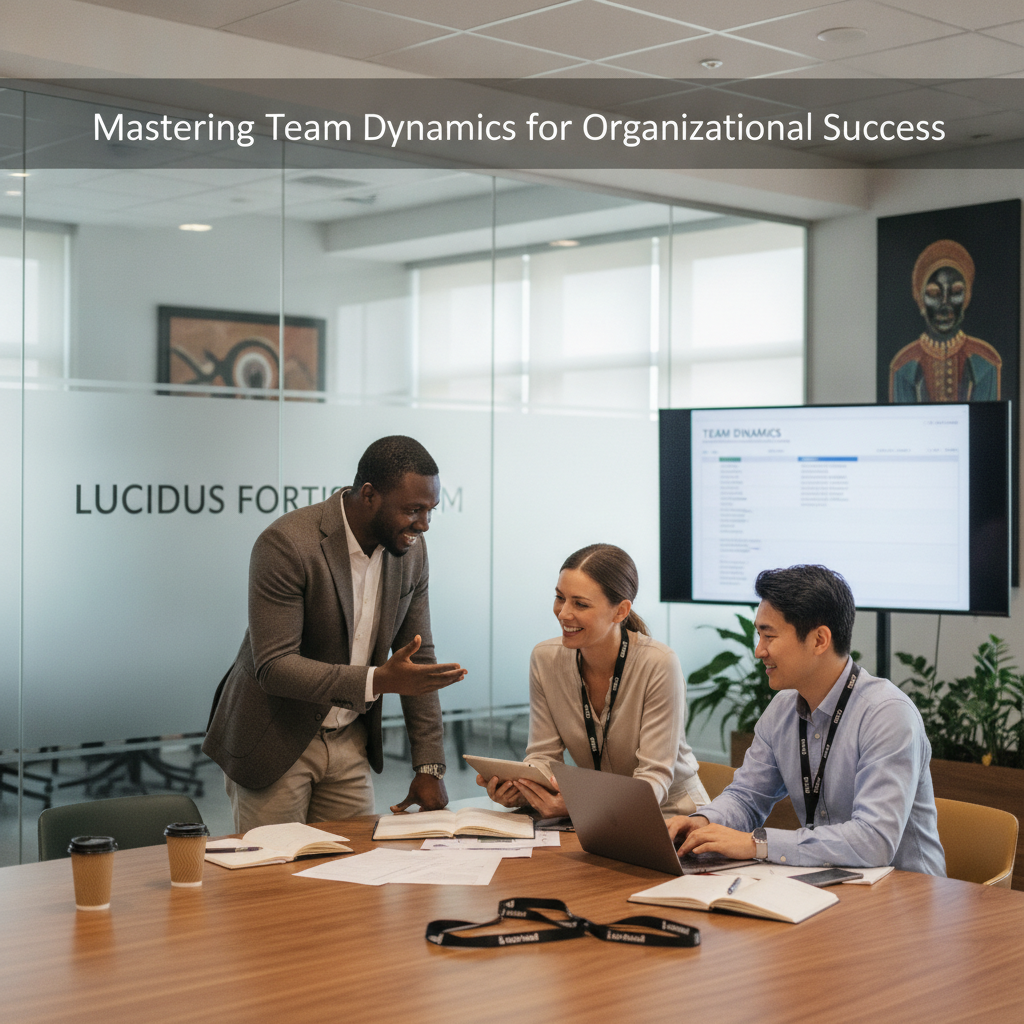
In today’s fast-changing business landscape, team dynamics are the invisible architecture of performance. At Lucidus Fortis, we’ve seen that the difference between thriving and stagnating often lies not in strategy alone, but in how teams collaborate, communicate, and innovate together. This article explores the core elements of effective team dynamics and how we apply them to drive measurable results.
The Five Pillars of High-Performance Team Dynamics
The foundation of any high-functioning team, especially within the context of an AI strategy for enterprises, rests on five interconnected pillars. We at Lucidus Fortis have observed that organizations investing billions in technology often fail because the human dynamics are brittle; they lack the structural integrity to handle the velocity of change that AI-driven business consulting demands.
The first pillar is psychological safety. This is the bedrock. Without it, a team cannot harness the cognitive diversity required for true innovation. In a recent engagement with a healthcare AI startup, we discovered that their data scientists were afraid to challenge the CEO’s hypothesis on a new diagnostic tool. The fear of being wrong was costing the firm millions in business process optimization. At Lucidus Fortis, we model this daily; our partners are expected to admit “I don’t know” in strategy meetings. We mandate that the most junior analyst speaks first on a problem, establishing that expertise is not tied to title. This allows us to execute high-stakes digital transformation consulting without the friction of ego.
The second pillar is clear roles and goals. In the chaos of cross-border business growth, ambiguity is the enemy of execution. We worked with a global fintech client integrating a cross-border payment system; their teams in Singapore, London, and São Paulo were stepping on each other’s toes. Their operational excellence consulting was failing because no one knew who owned the “regulatory risk” vector versus the “tech stack” vector. We used RACI matrices specifically tied to AI deliverables, mapping every “driver” to a specific outcome. When roles are fuzzy, accountability dissolves, and innovation stalls.
Third is open communication, which, for a technology-driven consulting firm like ours, means radical transparency regarding data and decision logic. We recently advised a company creating a large language model for contract analysis. Communication had broken into silos between the legal compliance team and the engineers. We established “translation rituals”—daily stand-ups where engineers explain model limitations in business terms and lawyers explain regulatory requirements in technical constraints. This is not just “nice to have”; it is a prerequisite for any AI strategy for enterprises that seeks to avoid catastrophic deployment errors.
Fourth is mutual accountability. This is the hardest to build in global business strategy firm engagements because teams are distributed. We moved a frontier tech client from a culture of “blame” to “shared ownership” by implementing a peer-review system for sprint deliverables. If one team member fails a model’s validation gate, the whole squad stops. This drives corporate performance improvement because it forces peer-to-peer coaching rather than top-down policing.
Finally, adaptive leadership. A premium management consulting firm cannot succeed with rigid hierarchy. In the innovation consulting services we provide, leaders must shift between coaching and directing depending on the team’s maturity. We reference Tuckman’s stages of group development—forming, storming, norming, performing—to accelerate team assembly. We have a proprietary method to compress the “storming” phase from weeks to days by using structured conflict protocols. During a merger integration for a client, we moved a team from forming to performing in two weeks by establishing explicit norms for decision rights and conflict resolution.
These pillars are not sequential; they are a flywheel. Psychological safety enables the honest feedback required for open communication, which clarifies roles, which drives accountability, which empowers adaptive leadership to redeploy resources fast. At Lucidus Fortis, we weave these dynamics into every engagement—whether it is designing a sustainable business consulting roadmap or architecting a complex AI governance model. We do not just advise on strategy; we force the team operating system to upgrade, ensuring that your organization does not just survive disruption but drives it.
Conclusions
Team dynamics are not a soft skill — they are a competitive lever. At Lucidus Fortis, we embed these principles into every client engagement, turning groups into high-performing teams that deliver growth, revenue, and people satisfaction. By mastering the five pillars, your organization can unlock its full potential and navigate change with confidence.